Textile care · Bedding
Choosing a Coyuchi Throw: Fiber, Texture, and Everyday Care
A throw blanket is a small domestic decision with a long daily life. It moves from sofa to bed, from cool morning to open window, and through seasons of use and washing. Color catches the eye; fiber, weave, construction, and care determine how well it lives with you.
Published November 16, 2026
When comparing Coyuchi throws, resist the temptation to begin and end with a shade or a room scheme. A blanket’s material helps determine how warm it feels, how it falls across the body, whether it develops a relaxed surface or holds a crisp one, and what kind of laundering it can tolerate. The right choice is not necessarily the softest throw in a product description or the one with the most emphatic sustainability language. It is the one whose qualities suit the way you will actually use and care for it.
That means asking practical questions before making an aesthetic judgment. Will the throw be a light layer for an evening indoors, or a substantial cover for colder days? Will it be draped over a chair and used occasionally, or carried from room to room every day? Is it likely to meet pets, children, snacks, or frequent washing? Those ordinary details matter. A beautiful textile that is difficult to maintain may be used less, while a well-matched blanket can become a familiar part of the household routine.
Start with the fiber, not the label
Fiber is the first useful clue, but it is not a complete verdict. Natural fibers such as cotton and wool have distinct characteristics; linen is made from flax. Each can be spun, woven, finished, and blended in different ways. Those choices change the final textile, sometimes as much as the raw material itself. Two throws described with the same fiber name may differ in weight, surface, drape, warmth, and care requirements.
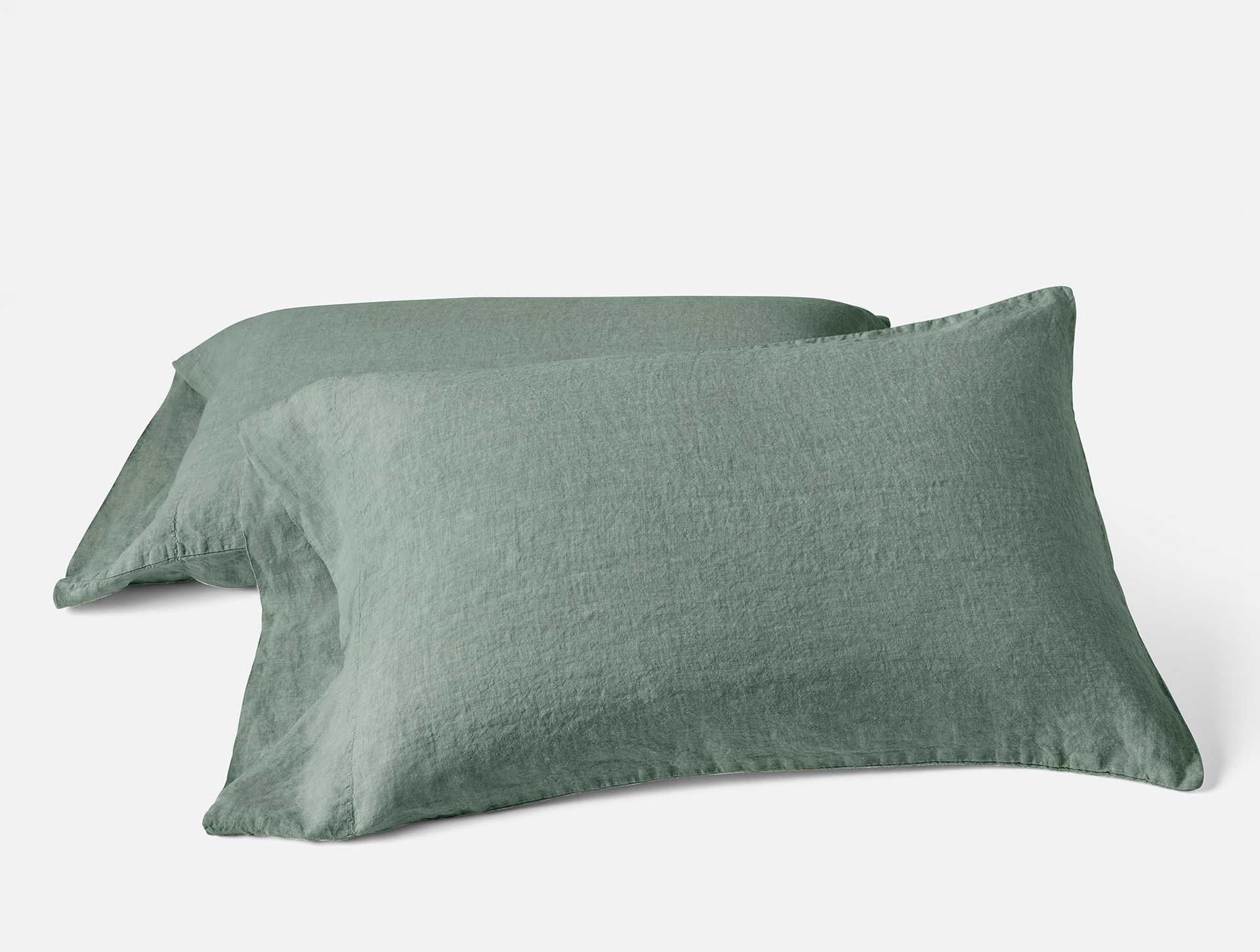
Linen is often associated with a textured, airy hand and a relaxed appearance. Its visible irregularities are part of the character of the fiber, not necessarily a flaw. Depending on construction and weight, a linen throw may feel light and fluid or comparatively substantial. It can be a useful layer for people who value texture and an unfussy look, but the care label still deserves attention: linen pieces are not all finished or constructed identically.
Cotton can offer a familiar, versatile feel, with performance shaped by yarn, weave, and thickness. A loosely woven cotton textile may feel open and supple; a denser construction may have more body. Wool is commonly chosen for warmth and insulating comfort, though its feel and upkeep vary by fiber type and finishing. Some wool textiles call for gentler handling or specialist cleaning. Rather than assuming that a material name guarantees a particular experience, read the specifications for the individual throw.
Blends add another layer to the comparison. Combining fibers can change softness, resilience, weight, or ease of care, but it can also make recycling and sorting at the end of a textile’s life more complicated. Check the stated fiber percentages rather than relying on a broad phrase such as “natural blend.” A clear composition lets you compare products and anticipate care more realistically.
Texture is construction made tangible
Texture is not just a matter of taste. It is a clue to how a throw may feel against skin, how it drapes, and how it responds to regular handling. A smooth surface may slide easily over a sofa or bed. A raised, looped, brushed, or open-textured surface may feel more tactile and visually substantial. Some weaves reveal their structure clearly; others create a more even surface. The words used in descriptions can help, but they are not standardized measures.
When possible, inspect the weave closely or feel a sample in person. Notice whether the fabric springs back after being folded, whether the surface catches on rough edges, and whether the throw has a loose fringe or delicate finishing that might snag. If shopping online, look for concrete details: fiber content, dimensions, fabric weight if provided, country of manufacture, and specific care directions. A product description that explains construction gives you more to work with than a string of mood-setting adjectives.
Drape matters, too. A blanket that falls softly over the shoulders can feel different from one that holds a more structured shape. Weight influences this impression, but dimensions do as well: a compact throw may be easy to carry and fold, while a larger one can cover more of the body or furniture. Consider the intended setting and the people who will use it. The most useful size is the one that fits those routines, not simply the one that looks generous in a photograph.
Match warmth to the way you live
“Warm” is not a single performance rating. It depends on the textile’s fiber, thickness, weave, size, and how it is layered. A heavier blanket may offer more coverage, while a lighter one may be easier to keep nearby through changing indoor temperatures. The room itself matters: a drafty reading corner, a heated apartment, and a cool bedroom invite different choices.
Think about when the throw will be used. A quick layer during a chilly morning may call for something light and easy to fold. A blanket meant for extended lounging may need greater coverage and a feel that remains comfortable over time. If it will serve as a decorative layer on a bed, consider whether its weight could make it awkward to remove or store. These small practicalities often determine whether a throw becomes a daily companion or a rarely touched accent.
For households with more than one user, prioritize versatility. A textile that is comfortable against bare arms, easy to retrieve, and not overly precious may see more use than an especially delicate or demanding piece. The point is not to find a universal ideal. It is to choose a material and construction that make sense for the conditions in your home.
Read sustainability claims with care
Environmental responsibility is relevant to home textiles, but it is best considered through specific information rather than a single reassuring word. Ask what the fiber is, how it was sourced, where the material was made, and whether a stated certification applies to the particular product. If a certification is named, check what it covers. Some standards focus on organic fiber or processing requirements; others address different environmental or chemical considerations. A label is meaningful only in relation to its scope.
For any Coyuchi throw under consideration, use the product’s own description and care label as the source for its composition and claims. Do not assume that every throw from a brand has the same fibers, certification, manufacturing origin, or washing instructions. Product lines can include different materials and constructions, and details may change over time. When a claim is important to your decision, look for documentation that identifies what it applies to rather than relying on general brand language.
There is also a less glamorous sustainability question: will you use it, and can you maintain it? A durable textile that fits your household and receives appropriate care may stay useful longer. Buying for a real need, avoiding unnecessary washing, repairing minor damage where practical, and keeping a textile in rotation can all support a longer useful life. None of these habits makes a blanket impact-free, but they focus attention on the part of the textile lifecycle that unfolds at home.
Care begins before the first wash
The care label is not fine print. It is the best starting point for preserving a throw’s texture and shape. Check whether the instructions allow machine washing, specify a water temperature or cycle, recommend line drying, or call for professional cleaning. Also note any warnings about bleach, fabric softener, high heat, or wringing. A throw’s fiber content offers clues, but the label accounts for construction and finishing as well.
Before washing, look over the blanket for loose threads, snags, or stains. Treat a small mark promptly using a method suitable for the fabric, testing an inconspicuous area when appropriate. Avoid scrubbing aggressively: friction can roughen the surface or distort the weave. If the instructions permit laundering at home, wash the throw separately or with similar items when its size and construction could cause tangling or abrasion.
Use a reasonable amount of detergent. More is not better; excess product can be difficult to rinse out and may leave residue. Choose a cycle and temperature that match the label, and avoid adding bleach or softener unless the manufacturer specifically allows it. Fabric softener can change the feel or performance of some textiles, so it should not be treated as a universal shortcut to softness.
Drying deserves equal care. High heat and over-drying can stress fibers, affect dimensions, or change the hand of a fabric. If the label permits, line drying can reduce reliance on a dryer, though a heavy, wet throw may need support to prevent stretching. If tumble drying is allowed, follow the stated temperature and remove the blanket when it is dry rather than leaving it in prolonged heat. Spread it evenly and give it room to dry fully before folding or storing.
A simple routine for everyday longevity
A throw used on a sofa does not necessarily need washing as often as a sheet. Between washes, air it out when practical, shake away loose debris, and spot-clean small marks according to its care instructions. Rotate the blanket if one section receives more sunlight or wear than another. When it is not in use, fold it loosely or drape it over a suitable surface rather than compressing it under heavy objects.
Storage should be clean, dry, and free of prolonged dampness. Avoid sealing a textile away while it is even slightly wet. If the throw is seasonal, make sure it is clean and fully dry before putting it away; stains and body oils can become harder to address over time. Store it where it is protected from dust and pests, without forcing it into a space that crushes the weave or strains the edges.
Small repairs can also extend usefulness. A loose hem or minor snag may be manageable before it grows, though the right repair depends on the weave and finish. Do not pull a snagged thread; that can make the surrounding fabric distort. If you are uncertain, consult a textile-care professional or the brand’s care guidance rather than improvising with a cut or a knot.
A comparison checklist
Before choosing among throws, compare them using the same questions. This helps replace vague impressions with criteria connected to your needs.
- Fiber: What materials are present, and are percentages clearly stated?
- Construction: Is the weave open, dense, raised, brushed, or otherwise described?
- Weight and size: Will the throw provide the coverage and portability you want?
- Use: Is it intended for regular lounging, occasional layering, or mainly as a room accent?
- Care: Can you follow the washing and drying instructions with the equipment and time you have?
- Origin and claims: Are sourcing details or certifications clearly explained for this specific item?
- Repair and storage: Does the finish seem suited to the way your household handles textiles?
The best choice is the one that earns its place
Choosing a Coyuchi throw is ultimately an exercise in matching material to habit. Fiber and weave shape the feel; size and weight shape the use; care instructions shape the relationship over time. A throw that fits your climate, your preferred texture, and your laundry routine is more likely to remain useful long after the first impression of its color fades.
There is no need to turn a household textile into a test of perfect sustainability. Be attentive, not perfectionist. Read the label, compare the details, buy with a clear purpose, and care for the blanket as its construction requires. The quieter measure of a good throw is not how often it is discussed, but how naturally it finds its way into everyday life—and how long it stays there.
Frequently asked questions
What should I check first when comparing throws?
Start with fiber content and care instructions, then consider weave, weight, dimensions, and intended use. These details help you judge both comfort and whether the throw will fit your regular routine.
Does a natural fiber automatically mean a throw is sustainable?
No. Fiber type is one part of a textile’s impact. Sourcing, processing, construction, durability, care, and end-of-life options also matter. Look for specific, product-level information and understand what any certification covers.
How often should I wash a throw blanket?
There is no single schedule for every throw or household. Consider how frequently it is used, whether it has visible soil or odors, and what the care label permits. Spot-cleaning and airing it out between washes can sometimes reduce the need for a full wash.
Can I machine-wash a Coyuchi throw?
Care requirements depend on the particular throw’s fiber and construction. Follow the instructions attached to that item rather than assuming that all throws from the same brand can be washed the same way.