Bedding & textile care
How Naturepedic Organic Linen Duvet Covers Fit a Lower-Impact Bedding Routine
A duvet cover is more than a finishing layer. It protects an insert, gets laundered regularly and eventually reaches the end of its useful life. Looking closely at Naturepedic’s organic linen duvet covers offers a practical way to think through the environmental questions behind a bedding choice: where the fiber comes from, how the cloth is made, how long it lasts and what everyday care asks of it.
Published October 31, 2026
A bed is an intimate landscape, but the textiles on it have a longer journey than the short distance from cupboard to mattress. Fibers are grown or produced, turned into yarn, woven or knitted, finished, sewn, shipped and cared for. No single label or laundry habit tells the whole environmental story. Still, the choices made at each stage can add up—and a duvet cover is a useful place to begin because it combines a large amount of fabric with frequent, practical use.
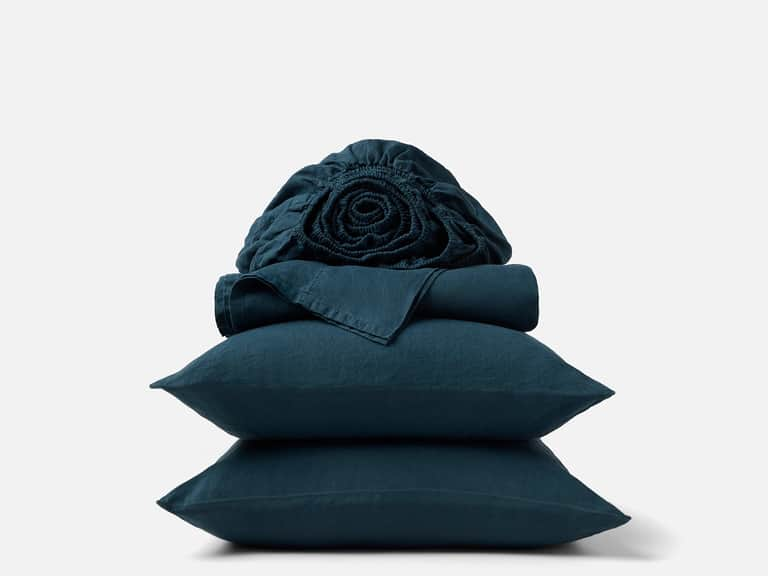
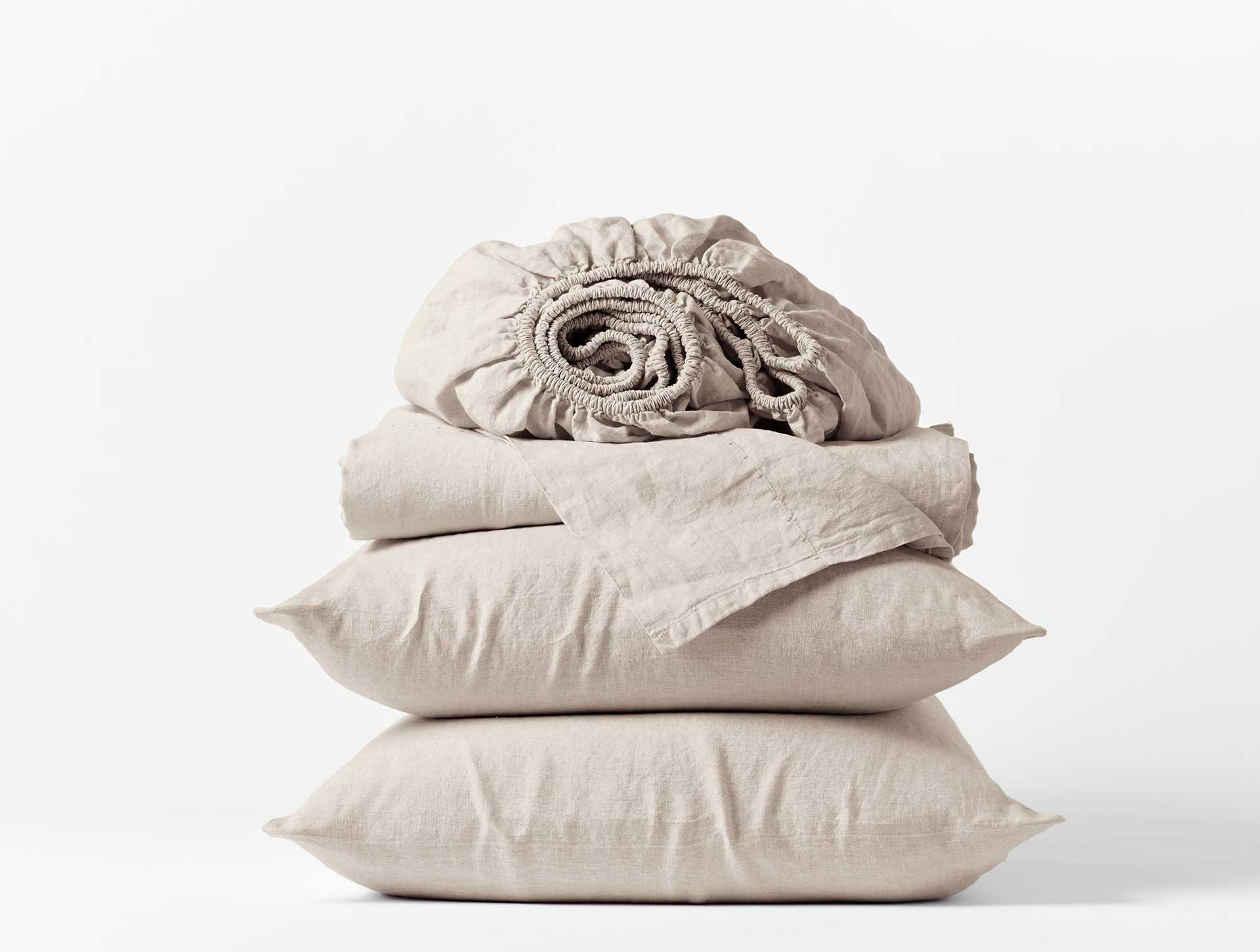
Naturepedic’s organic linen duvet covers offer a case study in how material, certification and care intersect. The described covers use GOTS-certified organic flax linen, with flax grown in France and linen made in a GOTS-certified facility in India. They are stone-washed, include corner ties to help secure a duvet insert, and are designed to be machine washed. Those details are informative, but they are not a complete life-cycle assessment. A considered routine asks not only what a cover is made from, but also how it is used and maintained over time.
The job a duvet cover does
A duvet cover is a removable textile shell around a duvet insert. It creates the washable surface that comes into contact with sleepers, helps shield the insert from everyday soil and makes it possible to change the bed’s look without replacing the inner layer. Because a cover can be removed and washed separately, it can support a more flexible cleaning routine than treating the insert as the first line of defense.
That practical role matters environmentally. The insert and cover have different care needs: the outer fabric may be washed more often, while the insert can often be cleaned less frequently, subject to its maker’s instructions and household circumstances. This separation does not eliminate laundry, but it can help focus routine washing on the layer that needs it. Keeping a cover in service for many years may also avoid premature replacement, though actual benefit depends on its lifespan, care, and what it replaces.
Corner ties, such as those specified for the Naturepedic covers, are a small construction detail with a straightforward purpose: they help hold the insert in position. A cover that functions well is more likely to remain useful. Fit matters, too. A properly sized cover is easier to put on, less prone to bunching and better able to protect the insert. Before laundering, check the care label and the dimensions; a cover that is forced into an overloaded washer may not rinse or move freely.
Why flax linen is part of the conversation
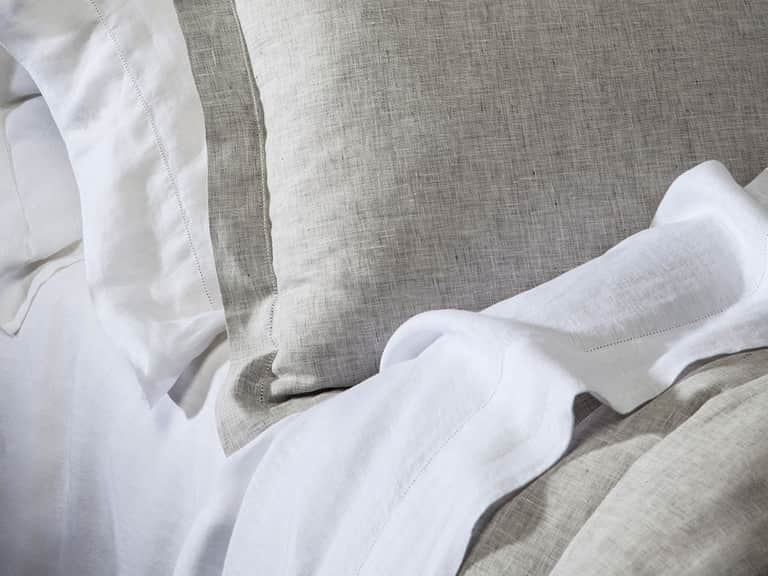
Linen is made from flax fibers. The plant’s stalks are processed to separate fibers, which are then spun into yarn and woven into cloth. Linen’s appeal is partly tactile: it has a distinct, slightly textured hand and often softens with use. Its open, breathable character can make it comfortable across seasons, although the experience varies with the weave, fabric weight, room conditions and individual preference.
Flax is a renewable agricultural fiber, but “plant-based” does not mean impact-free. Farming uses land and inputs; processing takes energy and water; dyeing and finishing have their own requirements; and manufacturing and shipping contribute to the product’s footprint. Environmental performance depends on the specific supply chain and methods used. It is more accurate to ask what is known about a particular textile than to assume every linen item is automatically sustainable.
For the Naturepedic example, the stated sourcing details provide a starting map: flax grown in France, linen produced in India at a GOTS-certified facility. Knowing where key stages occur can make a product’s journey more legible, but origin information alone does not quantify transport emissions or describe every processing step. Nor does it settle questions about durability, worker protections or end-of-life options. It is useful information—not a substitute for a full environmental accounting.
What GOTS certification indicates
The Global Organic Textile Standard, commonly known as GOTS, is a textile-processing standard for organic fibers. It addresses requirements along parts of the supply chain, including fiber sourcing, processing restrictions and social criteria. Certification is intended to offer more than a claim about the crop alone: it considers relevant stages between organic raw material and finished textile.
That distinction is important. A fabric described as organic may refer to the fiber’s agricultural origin, while certification can apply a broader set of requirements to processing and chain-of-custody. GOTS certification does not mean a product has no environmental impact, that it is carbon neutral, or that every possible sustainability issue has been resolved. It also does not guarantee the same performance or lifespan for every certified item. It is one useful piece of evidence, best read alongside the product’s material, origin, construction and care information.
For shoppers, the practical step is to verify that a certification claim is specific and current. Look for clear identification of the standard and, where available, details that allow the certification to be checked. A label can help distinguish a substantiated standard from broad terms such as “natural” or “eco-friendly,” which may carry little precise information on their own.
Durability is a care practice, not just a claim
A textile’s environmental value is shaped partly by how long it stays useful. A durable cover used repeatedly can spread the impacts of its manufacture across more nights of service. But durability is not simply a promise printed on packaging. It depends on fiber and weave, seam construction, how the item fits, how often it is washed, and whether the household follows care instructions.
Linen commonly develops a softer feel through use and laundering. That change can be welcome, but softening is not proof that a fabric will last indefinitely. Fibers can weaken through abrasion, excessive heat, harsh chemicals or repeated over-drying. The goal is not to avoid washing altogether; it is to clean the cover when needed while avoiding unnecessary stress.
Naturepedic’s listed care directions for these duvet covers are machine wash warm, tumble dry low, warm iron if desired, and no bleach. The care label on the specific item should take priority if instructions differ. Avoid assuming that every linen textile has the same tolerances: finishes, dyes, construction and manufacturer testing can vary. A pillowcase, decorative cover and duvet cover may share a fiber but still have different instructions.
A lower-impact laundering routine
Laundry choices affect the energy and water used to keep bedding clean. The most suitable routine is one that balances hygiene, fabric care and household needs. These steps can help limit avoidable wear without treating cleanliness as an environmental failure:
- Wash when the cover needs it. Frequency can vary with climate, personal preference, household use and health considerations. Follow any medical or care guidance relevant to your home rather than applying a rigid schedule.
- Check the care label first. For the Naturepedic example, the stated directions call for a warm machine wash and low tumble drying. Do not substitute cold water or line drying automatically if the maker specifies otherwise; care instructions are intended to preserve the product.
- Use an appropriate load size. Give the cover enough room to move and rinse. An overfilled machine can leave detergent behind or create extra friction; washing a very small load also uses resources that could have been shared with compatible laundry.
- Measure detergent carefully. More soap does not necessarily mean cleaner fabric. Excess detergent may be difficult to rinse out and can leave residue. Choose a product compatible with the textile and machine, and use the amount suited to the load and water conditions.
- Keep bleach out when the label says no bleach. Bleaching agents can damage fibers or alter color. Avoid adding whiteners simply because a light-colored cover has lost brightness; first review the label and the cause of discoloration.
- Use low heat as directed. Tumble drying on low can help reduce the stress associated with hotter settings. Remove the cover when dry rather than leaving it tumbling unnecessarily. If you prefer line drying, confirm that the care instructions permit it.
- Repair minor damage promptly. A loose seam or small tear may be repairable before it grows. Mending extends use when the textile is otherwise comfortable and functional.
There is no universal laundry setting that is best for every home. Machine efficiency, electricity sources, water heating, load size and drying method all matter. The careful approach is to avoid unnecessary cycles and excessive heat while meeting real cleanliness needs and respecting the manufacturer’s care directions.
Removable covers and the rhythm of cleaning
Because a cover can be removed, it offers a simple way to divide bedding care into layers. Sheets and pillowcases usually have closer contact with the body and are often washed on a different schedule from a duvet cover. The duvet insert, meanwhile, can require a more specialized or less frequent cleaning process. Always consult its own instructions; the cover’s label does not establish how the insert should be washed.
This distinction helps make routine cleaning more manageable. If a spill reaches the cover, it may be possible to remove and launder that layer without cleaning the entire duvet. If the cover remains clean and the household’s needs allow, there may be no reason to wash it merely because another bedding item is due. Such choices should be guided by comfort, hygiene, and circumstances—not by a blanket claim that less laundry is always better.
Using a removable cover can also help protect an insert from direct contact with everyday dirt and oils. Protection may contribute to longer service, but no cover can guarantee a particular lifespan. The insert’s construction, how often the bed is used and how it is stored all play a part. A clean, dry, fully aired bed is a practical objective; a perfect environmental record is not.
Look beyond the fiber name
When comparing bedding, it is tempting to make the decision a contest between materials. Linen, cotton, bamboo-derived fibers and silk each have different production pathways, textures and care demands. A fiber label by itself cannot tell a shopper which item will be the better choice over its useful life. A textile that suits a household and is used for years may be preferable to one that is frequently replaced because it is uncomfortable or difficult to maintain.
Useful questions include: What is the fiber composition? Where was the fiber grown, and where was the fabric made? Is a certification named clearly? What are the washing and drying requirements? Are seams and closures designed for regular use? Can the cover be repaired? Is the size compatible with the existing insert? These are concrete questions, unlike broad promises of purity or planet-friendliness.
Cost and environmental impact are not interchangeable measures. A higher price does not prove that a product is more responsibly made, and a lower price does not reveal its full supply-chain story. Nor does a “green” label remove the importance of buying thoughtfully. The least wasteful bedding may be the set that fits, feels comfortable, is cared for properly and does not need replacing soon.
A grounded checklist before choosing
For anyone considering an organic linen duvet cover, a short checklist can turn a vague sustainability intention into a useful decision:
- Confirm fiber content and read what the stated organic certification covers.
- Review the listed growing and manufacturing origins without treating origin alone as a full impact score.
- Check dimensions and closure details so the cover works with the duvet insert already in use.
- Make sure the stated washing routine is realistic for your household and laundry equipment.
- Plan to wash, dry and store the cover in line with its care instructions.
- Consider repair and continued use before replacement when the item develops a minor flaw.
Naturepedic’s organic linen duvet covers illustrate how a number of these considerations come together: certified organic flax linen, stated growing and manufacturing locations, a removable and washable design, and specific instructions for machine washing and low-temperature drying. Each detail contributes context. None, by itself, proves a product is impact-free.
The value of a routine that lasts
Sustainable bedding is not a single purchase followed by a declaration of success. It is a series of modest decisions: choose material information that can be checked, buy a cover that fits the insert, wash it when household needs call for it, and use care settings that protect the fabric. The routine matters because textiles experience most of their daily impact not in a product description but in the ordinary work of being used and cleaned.
A linen duvet cover cannot solve the wider problems of textile production. It can, however, prompt better questions about sourcing, standards, durability and care. GOTS certification provides a meaningful framework for evaluating organic textiles, while an item’s care label offers practical guidance for avoiding preventable damage. A removable cover can make bedding easier to clean in layers. Taken together, these are useful tools for making a more informed choice—without mistaking a considered choice for a perfect one.
The most credible lower-impact routine is therefore neither complicated nor absolute. It is specific to the textile, attentive to the home and built around keeping useful things in service. In the quiet work of making a bed, that may be the most practical form of sustainability: knowing what the fabric is, caring for it well, and letting it do its job for as long as it can.